Sunday, 21 September 2008

Happy Birthday To Us!

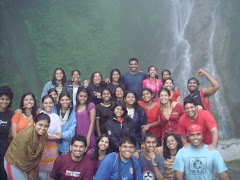
29 years is a lot longer than most of us have walked the planet and it is has been one amazing ride. I haven’t been around for long but I have heard enough stories and plenty of ‘gyaan’ from the seniors to build my picture of how the past years have been.
At this point I have to make a disclaimer. Most people less than a couple of camps old will not be able to understand much of this article. But since this is the reunion special, I take the liberty of letting myself go on pen and paper (sorry, keyboard and monitor) here.
I have heard of all the beautiful places it has been to, and all the jungles it has explored. All the not-so-easy-on-the-backside- bus rides and all the towns wiped out of food! Cameras in the stream and eunuchs in the train! I have, in a way, been a part of it all.
What truly is the most amazing part of the experience is that every camp, every event has its story to tell. Something has always happened. The sleepless nights of the exhibitions and all the ambitious plans, some successful, others not so much!
For those of us who have been an active part of the Nature Club can probably never explain to anyone else what it is like. To be lost in forests somewhere, with no network, or to be stuck at sub-zero temperatures at one of the highest places in the country. To be stuck in a train for 60 hours or to just plunge into a random waterfall by the road!
Someone once saw the insect-bites I brought home from a camp and asked, “Why? Why do you guys do this to yourselves?”
I had no answer. Or at least no words to put it in. You have to experience it to know what it’s like. What it’s like to be a part of NC, and a part of this community. This remote sense of adventure and going to places where you would dare not set foot otherwise!
NC has also had some of the wittiest (and the most frustrating) jokes I have ever heard. Somehow, even in the darkest of situations, even when you know you’re in some serious trouble, there will always be someone who’ll come up with the odd wisecracks. And not just then, there are other times too. We are in a forest somewhere, and the COM (NC terminology) is talking about a rare tree or some bird call (which, by the way, I always pretend to hear, like most others) and someone would find something funny.
I have also met some amazing people here. The seniors who never carry food on treks and the juniors who are always noisy. The crazy nicknames everyone has and everyone’s individual, most specific quirks and that one poor guy (or girl) who becomes joke of the season.
Tradition too has been a part of NC. Each chairperson competes with the predecessor to beat the number of memberships! The dumb charades and the antaksharis with the same songs sung over and over again on every bus ride. The whacks, the exhibitions and the just-cant-take-one-more-step treks! It’s like rites of passage. Everyone goes through it and we are one proud lot! So let’s conclude this little trip down memory lane with…
“Sir! I just saw a spotted dove!”
“How do you know it was a spotted dove?”
“I just spotted it!”
WHACK!

Monday, 25 August 2008

Looking for 'Someday'


Kohima is a quiet town. Quiet on the outside, but look closely, and everyone is screaming within, silently. The manifestations of anger here are many and suppressed. It shows itself in a villager’s dao or maybe in that soldier’s uniform or in as a little child playing in the alley and in those quiet eyes that stare at us from the dingy houses in the bylanes. The anger is all around us in a cry for independence and a daily struggle for survival.In the middle of this chaos stands the Kohima War Cemetery. It is a gruesome reminder of the battle in Kohima between the Allied forces and the Japanese during the Second World War. The graves of the soldiers of the Allied forces lie in rows next to each other with a simple stone plate to tell the tale of the boy who lies six feet under.I use the word ‘boy’ for a reason. The soldiers were no older than twenty-five. Most were much younger. Lives cut short by a pointless war in which all nations were destroyed in victory or defeat. As I walked past the epitaphs, one in particular caught my attention. As I read it, it felt like something within me was sinking and falling away, leaving behind a void. A void with a question. A 22-year-old soldier’s parents had inscribed on his headstone:
“Our Beloved Son, gave his life so that we may live,Someday we will understand.”
The question wasn’t whether that ‘someday’ ever came. The question is that even today in Kohima and so many other parts of the world, parents are still looking for ‘someday’. At that moment nothing matters- patriotism, politics, war, peace, independence, courage, victory, defeat…hollow words. All that mattered was that a boy had lost his life. I began to wonder what his last moment could have been like. That one last painful, painless moment. The pride of having fallen at war? Or the regret of a life unfinished? Could anyone ever know?My eyes welled-up for a stranger who lay there below the ground. Why? Because his reality was no different than mine. A cruel irony, as I stood by a soldier’s grave, a convoy of military trucks passed by on the road below. There were boys there too. A fragile boundary between the soldiers above the ground and those below it, even sixty-three years later. Sixty-three years after a boy’s parents wished to come to terms with his death, we are still struggling to come to terms with our lives.


Someday we will understand

Friday, 22 August 2008

Shhh...

An account of my experience on evening on the banks of river Kameng in Bhalukpong, Arunachal Pradesh, this summer. This is the closest I could have come to describing it in words...I am sitting by the river staring at the water. Its flowing away to someone else. The white rocks on the river bed shine like giant dew drops perfectly round. And there is silence…It is a silence I haven’t known in a long time. No people talking, no TV blasting, no vehicles honking. Just a silent gushing of the river. A faraway bird calls from the trees on the other side. For a moment I try to place it in an encyclopaedia, in a bird book, in my mind. Almost immediately I give up, chasing away every thought. A strange thought-free floating state. And there is silence…There are people around me, who like me are hearing the silence. I lie down to move them out of my sight and to stare at the sky, free from human beings. A blue canvas spread across my eyes, till a cloud floats in to interrupt the monochrome. And there is silence…As I lie there, for a moment, I experience the rawness of being alive. For a moment, I have a sudden realization that I am but a part of the landscape, a part of the web, and my senses absorb it all. My clothes, shoes, watch, backpack….all seem alien, like they are distancing me from nature. And then, in my mind, for one moment, the boundaries begin to blur and I feel a sort of sinking, like I am melting into the rocks, becoming a part of them. For one moment I am no longer human, just alive, as alive as could be. And the moment is gone, And there is silence…

Friday, 13 July 2007

A New Beginning.

It was a cold morning in Diskit with colder water to brush our already numb teeth. Despite the fact that we had to reach North Pullu only after 1100 hrs. the Crazy Old Man woke us up in the middle of the night. The evening before, we had learned the hard way that water heated for half an hour would reach to a temperature that would be referred to in Mumbai as saadaa paani. So without fussing over the numbing experienced by us at both the extreme ends of the alimentary canal, we got ready.

We assembled at the hotel dinning room with empty water bottles and equally empty stomachs. A brand new day and a brand new beginning. The host served us omelettes and parathas and we continued to live up to our tradition of exhausting the food supplies of every place that we ate at. We were also served a rare speciality beverage - warm water.

Water bottles and stomachs full, we started our journey back to Leh. The route was scenic and wound around endless mountains, valleys and rivers. North Pullu was a three-hour journey. Onwards, we would be passing Khardung La, the highest motorable pass in the world at 18380 feet above sea level. A day earlier we had clicked pictures there in the snow standing around a board, which clearly mentioned “No Parking”. It sure must be lonely at the top. From Khardung La, we had to reach South Pullu and then a one-hour drive to Leh.

We reached North Pullu at noon. The Army convoy from South Pullu was expected any minute. Needless to say, till it did arrive and pass us, we would have to wait at North Pullu along with other buses and trucks. Quite a few roadside establishments, which partially hid a clear flowing stream, were offering instant noodles for ready consumption. It was almost lunchtime and the singing had made us hungry. Surprisingly our stomachs had enough place to accommodate two to three plates of Maggi Noodles.

The Army Convoy was yet to arrive and it was already 1500hrs. We had passed time eating, drinking water from the stream, chatting up random military personnel and were suddenly out of interesting activities. I decided to play some fast songs in the bus and the group responded by dancing to them inside the bus, the driver responded by switching on the coloured lights in the bus and a large crowd gathered outside the bus wondering why the bus was gyrating like a car in some condom advertisement.

At 1700 hrs. we were informed that the Army Convoy would not be coming as it had snowed heavily near Khardung La and that we could now pass along with the other vehicles at our own convenience. Our bus travelled for less than an hour only to be stopped on the narrow road. The trucks ahead of us in line had stopped for reasons unknown to us. Possibly stuck by excess snow on the road. We had gained considerable height and were thereby drinking lots of water and eating sweets to fight altitude sickness.

By now we had gained expertise in over-eating but the water we drank was beyond our control. The snowfall made it worse and we had to relieve ourselves every few minutes. Soon we were out of water and some of us started showing symptoms of altitude sickness. Headaches, drowsiness, breathlessness, the works. Maybe we’d find some wood to burn outside the bus. The facts of the case were as under:
1) We were around 17000 feet to 18000 feet above sea level;
2) It was snowing;
3) Rocks and three feet of snow covering the road were the only things visible in torch light;
4) It was dark; and
5) The road was hardly 10 feet wide.
So … no firewood.

The bus drivers had a stove and a cylinder. They were glad to be of help and set it up in the aisle. A first batch of two to three guys donned their jackets and gloves and headed out with our empty water bottles to bring snow to melt into water. But the snow solidified in the bottles to form ice. Tiffin boxes were then used to get more snow. The snow was transferred to a partially cleaned steel vessel and heated over the stove. The first batch of warm liquid snow with a lot of impurities and a distinct rubber odour was consumed as fast as a tequila shot.

At the same time we decided to distribute chocolate for to the gang in order to get their energy levels up. The chocolate slab was so cold that it refused to break using bare hands. We had to strike it on the bus handlebars to each time we needed to break a small piece of chocolate. Eating chocolate and drinking water had by now initiated movements in the guts. Nine of us had to go take a dump in the snow. That experience is a separate story in itself.

We were out of water very quickly. I volunteered to go collect snow. I made sure that I collected snow from only the highest places possible to avoid human waste pollution. I was required to make three trips in that cold freezing night. After that I cooked us some water. Somehow it tasted less funny now. Maybe the vessel got cleaner. Maybe the previous team had collected snow from a much lower height. Just drink the damn water and stay alive!

At around 2230 hrs. we heard a knock on our bus door. Apart from the driver’s door and my last seat window, that door was the only opening in the bus that was not jammed due to frost. Two heavily clothed Army personnel informed us that they had come walking from Khardung La and efforts were on to restart the traffic movements. They also informed all guys above 18 years of age to be ready in case the bus needed to be pushed out of the snow. They even sarcastically called Ashwin a ‘Hero’ and asked him to wear some warm clothes and he promptly agreed and did the needful.

The traffic started moving in an hour. Slow but moving. We reached Khardung La at about 0130 hrs. and made it a point to wake up everyone who had wished to visit the souvenir shop on their way back. Our intentions were good but what could we do if the souvenir shop was closed at 0130 hrs. in the morning?

An officer of probably the Ladakh Scouts got into our bus and kept talking into his walkie-talkie. He was to accompany us to South Pullu as our hotel in Leh had alerted the authorities about the delay in our return. The road from Khardung La to South Pullu had absolutely no signs of snow, not even rains. It was much warmer than the other side of the mountain.

After dropping the officer at Sorth Pullu, our driver took us down to Leh by driving straight down the mountain and bypassing the winding road completely. We reached our hotel in Leh at 0400 hrs. Before sleeping the COM informed us that wakeup would be at 0830 hrs. A whole new day would begin in the next four hours.

Loo-p Holes

From the time we entered Ladakh from Sonmarg, we were directed to drink water. Not one or two sips or gulps but 3 to 4 litres a day. I remembered from biology class that 70% of the human body is composed of water. Water happens to be the base of our cellular constitution and also the medium for transfer of oxygen and energy to these cells and thereby keeping our body alive. The brain happens to be the most sensitive organ of the body and brain cells start dying very quickly if flow of oxygen and energy is stopped even for a few seconds. And brain cells did not regenerate.

Water was important. But then another biology lecture had informed me that the human urinary bladder has a maximum capacity of half a litre. And that coupled with the fact that the temperatures were around 10 Degree Celsius, well, we had a problem.

Due to narrow roads and hilly terrain, the bus was anyways on an average doing a 20 kmph. and now these su-su breaks were not exactly helping us increase our average speed. But if you had to go then you HAD to go! There were no two ways about it. But we had to wait at least till the bus was at a convenient place to stop. Also we had to make sure that there were places favourable for the women to go. There were no streetlights or lanes drawn on the roads, so expecting toilet facilities along the road was like expecting a non-coalition government in India.

But as I said before, if you had to go then you HAD to go! So we started improvising. Sleeping bags were used as makeshift cubicles. The women always had to go in groups wherein they took turns holding the sleeping bags and … doing their business. We guys were better off and could all pee at the same time enjoying the scenic views. But by the time the girls returned from their mission we guys would have a newly filled bladder ready to burst again. Timing was of prime importance.

And then again there were some women who I can swear were endowed with enormous bladders. They just never went out to pee. I wasn’t quite sure if it was their anatomy or some other secret procedures they followed, so I made sure that I had water ONLY from my bottle.

We have answered the call of nature at some of the most fascinating places in Ladakh. The view of Pangong Lake was awesome and while I am writing this I suspect I have another theory for it being brackish in nature and devoid of life. I just need to work out the mystery of its shades of blue.

The synchronization experienced during community excrement session while we were stuck in a blizzard at Khardung La is worth a mention. We were covered in woollens and warm attire from head to toe except for our exits and the snowfall made it more adventurous.

The women, I am sure, must have had their own set of adventures while they had to resort to evasive manoeuvres to hide from trucks and other vehicles carrying curious onlookers.

Some places did have toilets but it was rare that they would be usable, forget clean. Some were made such that I think they just installed the pots without any plumbing beneath it. And then there were the Ladakhi style toilets. These toilets are generally just rectangular cavities in the ground with at least 10 to 20 feet of empty space below them. Ladakh is devoid of fertile soil and night soil collected over a year is used to fertilise the fields. I did not use them. I am not a sadist when it comes to poop. Imagine your poop falling 10 to 20 feet below you. What had it ever done to deserve such treatment?

We had problems as a group as regards to toilet facilities, but we managed. We did raise this issue with the Deputy Commissioner of Ladakh, one Mr. Dwivedi, when we met him in Leh. He was very diplomatic in his answers and replied coolly that by the time we visited next, the problem would be solved. He must have known that the same group would never manage to find the time and resources together to visit Ladakh again, ever. And individually, we’d never meet him.

So that was it. That’s what we faced and that’s how we solved the problems. As guys we had lesser sufferings and I am sure that they must feel more strongly towards the issue. But they have got to admit that no facilities meant complete freedom and an experience worth remembering.

Thursday, 28 June 2007

Pied pipers of Hemis..

Hemis gompa was our next stop destination when we embarked into the hired taxis. Situated at an altitude of 12000 ft it was about 45 kms from our hotel in Leh. With the thought of yet another journey floating in my mind, I wasn’t too energized but set out to visit this structure.

Besides having heard interesting facts about Hemis Monastery that it holds the distinction of being the biggest as well as the wealthiest monastery of Ladakh, I wasn’t really looking forward to this monument. I guess this was the effect of ‘other’ monasteries, which bore a testimony of neglect and apathy, have had on me.

And the fact that Hemis gompa dates back to the year 1630, it’s visualisation as a remnant of a distinct culture and history was something that bothered me.

Once we reached the site I realised that my fascination and enticement towards this visit was at its low. I believe it had to do with the fact that both my body and soul wasn’t in sync with the exhaustive travelling that we had undertaken this fortnight.

And while I walked carelessly towards this structure a distant chant caught me anxious. I could hear the beating of drums from the other side of the wall. Synchronised with humming voices it had a captivating effect on me. I walked with hurried steps to locate the source as if I was being drawn towards it.

Once I entered the court of the gompa, I saw a huddle of monks dancing to the tunes of some ancient chants. There were three elderly monks reciting chants from an old manuscript, while the younger ones were following the experienced steps of a monk, who was leading the dance in a circular motion around a flagpole in the yard.

The mesmerising music was a mixture of chants and the sounds, emanating from some unfamiliar instruments, played by these three monks who were closely observing the steps with skilful eyes.

I watched the young monks following every step performed by the monk in the front, who was choreographing his steps to the tune of this tender music. With every movement each word and note seemed to have a greater meaning. The soft and tender chants were so rich in compassionate overtones that their slow movements in accord with the tune seemed soothing.

I saw some other elderly monks amused over the utilities of mobile phones, that the younger monks were carrying, suggesting me of their interaction with the technologically driven, outside world. I was wondering how they have managed to preserve and nurture this 200 yr old tradition. But as I watched them rehearse, I sensed their faithfulness and commitment towards their customs and their daily chores which has become a way of life for them.

Hemis serves as the venue of an annual festival, known as the festival of Tso Chu. It is celebrated every year to commemorate the birth of Padmasambhava, also known as Guru Rimpoche.

And during the festival a sacred mask dance is performed by the monks, dressed in colourful robes and wearing masks depicting various characters, who dance around the main tarchen(flagpole) in the main courtyard. The dance takes place on 9th and 10th day of the fifth month of the Tibetan calendar. Like many other religious beliefs it celebrates the triumph of good over evil.

This monastic festival is special during the year of the monkey, which comes once in 12 yrs, as it marks the birth year of Guru Rimpoche, the founder of Tantrik Buddhism in Tibet.

Unaffected and unconscious of the enthusiastic spectators and visitors, clicking pictures up-close, many without a sense of courtesy, the monks continued to practise for this year’s festival. Till one over-excited visitor decided to join them, to dance, for a picture, the monk leading the dance made offensive gestures to express his annoyance!

I gazed.

There was something in the air that enthralled me. I was getting captivated by the soulful music that hummed into my ears. While I walked sheepishly, close up to the monks who were undisturbed by the presence of the strangers, I realised their attentiveness was too high to be bothered by this intrusion into their space and time.

I walked as if I was hypnotised under their spell.
With calculated steps and moves I went and sat right beside the monks who were creating this magical harmony.

Their chants put me at comfort.
The tune was joyous and resonant to my inner being.

My eyes closed and with a sense of unawareness of the environment I was in, the people around me, the place I was in.. I sat quietly to listen to and feel the tones, the vibrancy and rhythms of the chants.

The melodious tune transported me to a place where I felt emotion without having to 'think' new thoughts. For a moment I realised that I was blank. There were no thoughts of the past or future. I was in the present.

It took my mind away from redundant or negative thinking to joyfulness.

This tender, calming and refreshing music seemed to have a healing effect on my body, mind and soul. I felt as if it broke my cycle of thought, enough to allow my natural energy to flow freely again; my body felt warmer; energized.

I felt I was closer to the ‘One’ than I have ever been. I felt I touched onto something, something unknown yet familiar; and it touched me.
I do not know if it was for real.
All I know for sure is that it gave me a rest; uplifted me when I was feeling out of sorts.

It felt as if I sat there for hours.

There was something about this place that made me feel at peace with myself.
Now I appreciate why music has been an integral part of meditation since the very dawn of civilisation.

I have read that ‘Buddha’ simply meant “one who is awakened”. Even though I have not become a Buddha but I guess I understand what it means to be Buddha. With these worthy rewards, the few minutes I spent in this abode were worth enjoying!

Energized and inspired, I moved on.

Friday, 15 June 2007

WULAR LAKE

The 'lily-embroidered' Wular is the largest fresh water lake in Asia. It is 5,180 feet above the main sea level and 54 kms. from Srinagar.Other estimates variously put it as 16 kms. long and 8 kms wide. in any case its area increases by nine times-thats right, by 900%-during the floods. The wular thus functions as a flood reserviour. That is why you will find considerable slit everywhere.
HISTORY:
Wular's ancient name was 'mahapadma-saras', after its presiding deity. The word wular is perhaps the corruption of the sanskrit ullola('trublent' or "with high waves"). At the centre of the lake ia an artifical island,zaina lank. it was built in 1443 by kashmir's celebrated King Zain-ul-Abedin, after whom it takes its name. It is used by boatmen who dread thw waves of the lake in strom though in the dry season it is no more than an island.
FISH AND WATER PLANTS:
This gigantic lake produces water-nuts and large quantities of fish. The people of the numerous villages on the shore eat and sell both.these fish include the sattar gad and the chhari gad,both of which are caught by net and hook; the larger fishes are caught by spears. lotuses are found in plenty.
BIRDS:
Water-fowls are found in plenty in the autum season. sea gulls are also found.
The bank of the river is very marshy. the rains,snow and streams bring soil down from the mountains and deposits it on these shores every year.