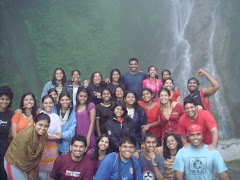
*Came across this poem in a book I'm reading and I thought a lot of the Nature Clubbers could relate*
Wander, wander,
wandering
meandering,
the urge to roam,
to dance,
to fly,
to be,
the search for
free,
the need to see
to go
to find
to search
to do,
my thirsts
so easily quenched
so close to home
and yours so grand,
so elegant,
so marvelous,
climbing mountaintops
and elephants
and tiger hunts
and dancing bears
and far off stars
and trips to mars
and all of it
so wild,
so vast,
so free,
as you go wander,
wander,
wandering,
and then the best
part of all
when, satisfied,
complete,
and happy now,
you wander
slowly
home
to me.
Showing posts with label Lyandra D. Show all posts
Showing posts with label Lyandra D. Show all posts
Tuesday, 23 September 2008

Friday, 15 June 2007
Wullar Lake
This is the largest fresh water lake in Asia.Its length is 24 Kms. and Breadth is 10 Kms.This lake is situated between Bandipore and Sopore.In the centre of lake there is a small island called "Zaina Lank" which was constructed by famous King Zainul-Abi-Din.The lake is considered to be the remanant of Satisar lake of pe-historic times.
Friday, 8 June 2007
Mountains
Lofty peaks rising up to the sky
Caressed by the clouds,
Kissed by the sun
Dusted gently with snow
How many tales to tell
How many mysteries to unravel
Unparalleled Beauty, Unrivaled strength
River & Lake, Forest & Desert
Slope & Valley, Sentinel and Protector
Jewel in India's crown
Guarded and Armed,
Revered and respected
Holy of Holies
House of mortals
Home of sages
Abode of Gods
Witness of the past
Testimony to the future
Statement of the present
Many mantles
Just one Mountain
*Plz feel free to change the name.. really couldnt think of anything else*
Caressed by the clouds,
Kissed by the sun
Dusted gently with snow
How many tales to tell
How many mysteries to unravel
Unparalleled Beauty, Unrivaled strength
River & Lake, Forest & Desert
Slope & Valley, Sentinel and Protector
Jewel in India's crown
Guarded and Armed,
Revered and respected
Holy of Holies
House of mortals
Home of sages
Abode of Gods
Witness of the past
Testimony to the future
Statement of the present
Many mantles
Just one Mountain
*Plz feel free to change the name.. really couldnt think of anything else*
Wednesday, 6 June 2007
Hazratbal
The most important muslim shrine of Kashmir, that commands the reverence of the people beyond measure,is undoubetedly the Hazratbal Shrine, which is situated on the left bank of the famous Dal Lake in Srinagar This unmatched reverence is anchored in the love and respect for the Prophet. Mohammad (peace be upon him), whose Moi-e-Muqqadus, (the sacred hair) is preserves here. The shrine is known by many names including Hazratbal, Assar-e-Sharief, Madinat-us-Sani, Dargah Sharief & Dargah.
The history of the shrine goes back to the early seventeenth century when the Mughal Emperor Shahjahan's Subedar, Sadiq Khan, laid out a garden here & constructed a palacial building, Ishrat Mahal or Pleasure House in 1623. However, the Emperor, during his visit in 1634, ordered the building to be converted into a prayer House with some additions & alterations. During the time of Aurangzeb, when MOI-e-Muqqadus arrived in
Sonmarg
Sonmarg
Sonamarg, at an altitude of 3,000 metres above sea level, 87 km north-east of Srinagar. The drive to Sonamargh is though yet another spectacular facet of country side in Kashmir, this time in Sindh Valley. The Sindh Valley is the largest tributary of the valley of Kashmir. It is upwards of sixty miles long, and valley and deep rock-girt gorge to open grassy meadow land and village-dotted slopes.
Sonamarg, which means ' meadow of gold ' has, as its backdrop, snowy mountains against a cerulean sky. the Sindh meanders along here and abounds with trout and mahseer, snow trout can be caught in the main river.Ponies can be hired for the trip up to Thajiwas glacier a major attraction during the summer months.
The climate of Sonamarg is very bracing; but the rainfall is frequent though not heavy, except for two or three days at a time in July and August with fine spell in between.
From Sonamarg, trekking routes lead to the Himalayan lakes of Vishansar (4084 msl), Krishnasar (3810 msl) and Gangabal (3658 msl). Other lakes in the region are Gadsar, stocked with snowtrout and Satsar, glacier-fed and surrounded by banks of alpine flowers.
A close by excursion is to Baltal, 15 km north of Sonamarg. This little valley lies at the foot of the Zojila, only a day's journey away from the sacred cave of Amarnath. Trekkers can also reach the starkly splendid roof-top of the world – Leh, by crossing over the Zijila Pass
Shankaracharya Hill
The Shankaracharya temple atop about 1000 feet high hillock of the same name is to the south-east of Srinagar. Ringed by the perennially snow-bound mountain peaks, the magnificent Dal Lake and the zig-zagging Vitasta (Jhelum) flowing placidly through the heart of the ancient city of Srinagar and the temple commands a fascinating bird's eye-view of the city and the celestial Valley. The Shiva temple a massive stone structure is built on a high octagonal plinth strictly in accordance with Hindu tradition. The temple has 84 recesses on its exterior and is surrounded by a parapet well enabling devotees to have the Parikrama of the temple safely. The stairs leading to the sanctum santorum number 36, first flight of 18 steps followed by 12 steps and again followed by six steps on either side of the landing terminating the second flight. This total of 36 steps is also in accordance with Hindu tradition, 36 denoting as many elements of which cosmos is made, viz. Shiva Tattva to the Prithvi Tattva.
Pari Mahal
Once the royal observatory, Pari Mahal has a charmingly laid out garden and is a five-minute drive from Cheshmashahi near
Pari Mahal was initially a garden founded by Dara Shiko, Mughal Emperor Shah Jehan's eldest son for his Sufi teacher, Mulla Shah. Once dotted with numerous springs, which have dried up now, the Pari Mahal gardens are now the treasure possession of the state. Pari Mahal is bedazzling with radiant lights at night, and though located on the spur of a hill, can he seen from most places in
Thiksey Gompa
Thiksey Gompa of Ladakh is situated at a distance of approximately 18 km from the town of Leh. One of the most beautiful monasteries of Ladakh, it belongs to the Gelukpa Order of Buddhism. Sherab Zangpo of Stod got the Thikse Monastery built for the first time, at Stakmo. However, later Spon Paldan Sherab, the nephew of Sherab Zangpo, reconstructed the monastery in the year 1430 AD. The new monastery was sited on a hilltop, to the north of Indus River.
Thikse Monastery of Leh Ladakh houses a temple, known as Lakhang Nyerma. This temple, built by Rinchen Zangpo, the Translator, is dedicated to Goddess Dorje Chenmo. A huge temple in its time, today it stands mostly in ruins. Apart from this temple, there are a number of other sacred shrines inside the monastery complex. The monastery also has a rich collection of numerous valuable artifacts and ancient relics.
Thiksey Gompa serves as the residence of approximately eighty monks. It has been served, for quite a long time, by the successive reincarnations of the Skyabsje Khanpo Rinpoche. The monastery also plays the host to Gustor ritual, organized from the 17th to 19th day of the ninth month of the Tibetan calendar. Sacred dances also form a part of this ritual, which takes place on an annual basis.
Thikse Monastery of Leh Ladakh houses a temple, known as Lakhang Nyerma. This temple, built by Rinchen Zangpo, the Translator, is dedicated to Goddess Dorje Chenmo. A huge temple in its time, today it stands mostly in ruins. Apart from this temple, there are a number of other sacred shrines inside the monastery complex. The monastery also has a rich collection of numerous valuable artifacts and ancient relics.
Thiksey Gompa serves as the residence of approximately eighty monks. It has been served, for quite a long time, by the successive reincarnations of the Skyabsje Khanpo Rinpoche. The monastery also plays the host to Gustor ritual, organized from the 17th to 19th day of the ninth month of the Tibetan calendar. Sacred dances also form a part of this ritual, which takes place on an annual basis.
Shey Gompa
Shey Gompa of Ladakh is situated on a hillock, at a distance of approximately 15 km to the south of Leh town. The monastery was erected on the instructions of King Deldon Namgyal, in the memory of his late father, Singay Namgyal. The main image inside the Shey Monastery is that of Buddha Shalyamuni. It is a huge image of the seated Buddha and is considered to be the biggest metal statue and the second largest Buddha statue in the Ladakh region. Copper sheets, gilded with gold, make up this amazing Buddha statue.
The image also contains sacrificial offerings such as grain, jewels, holy signs and mantras inside it. On both the sidewalls of the Buddha statue, are displayed the 16 Arhats (Worthy Ones who have achieved Nirvana), eight being on each side. The back wall of the statue is painted with the images of the two chief disciples of Buddha, namely Sariputra and Maudgalyayana. There is hardly any wall around the Buddha statue that is not painted with any image.
A large bowl of wax with a central flame, symbolizing divinity and purity, is placed in front of the Buddha statue. This flame burns continuously for one year, before getting replaced. Some exquisite murals adorn the second story of the Shey Monastery of Leh Ladakh. While, the lower story comprises of a large library and is decorated with murals depicting Buddha, with various types of hand gestures. An annual festival is also held at Shey Gompa, on the 30th day of the first month of the Tibetan calendar.
The image also contains sacrificial offerings such as grain, jewels, holy signs and mantras inside it. On both the sidewalls of the Buddha statue, are displayed the 16 Arhats (Worthy Ones who have achieved Nirvana), eight being on each side. The back wall of the statue is painted with the images of the two chief disciples of Buddha, namely Sariputra and Maudgalyayana. There is hardly any wall around the Buddha statue that is not painted with any image.
A large bowl of wax with a central flame, symbolizing divinity and purity, is placed in front of the Buddha statue. This flame burns continuously for one year, before getting replaced. Some exquisite murals adorn the second story of the Shey Monastery of Leh Ladakh. While, the lower story comprises of a large library and is decorated with murals depicting Buddha, with various types of hand gestures. An annual festival is also held at Shey Gompa, on the 30th day of the first month of the Tibetan calendar.
Shanti Stupa
Shanti Stupa of Ladakh is located on the hilltop at Changspa. It can be reached quite easily from the Fort Road. The Stupa was constructed by a Japanese Buddhist organization, known as 'The Japanese for World Peace'. The aim behind the construction of the stupa was to commemorate 2500 years of Buddhism and to promote World Peace. His Holiness, the Dalai Lama inaugurated the Shanti Stupa in the year 1985.
A magnificent white-domed structure, the Shanti Stupa of Leh Ladakh offers spectacular views of the sunrise and sunset. The stupa looks best at night, when it is beautifully illuminated with glittering lights. A large number of tourists come to Ladakh every year to visit this amazing stupa.
A magnificent white-domed structure, the Shanti Stupa of Leh Ladakh offers spectacular views of the sunrise and sunset. The stupa looks best at night, when it is beautifully illuminated with glittering lights. A large number of tourists come to Ladakh every year to visit this amazing stupa.
Namgyal Tsemo Gompa
Namgyal Tsemo Gompa was founded in the early 15th century, around the year 1430. It stands atop the crag behind Leh palace, having a full view of the town of Leh. And because of this position, it offers some of the most splendid visuals of the town. The Namgyal Tsemo Gompa of Ladakh was founded by King Tashi Namgyal and has been named after him only. It boasts of a rich collection of some ancient manuscripts and wall paintings.
One of the most treasured possessions of the monastery is a three-story high solid gold idol of Maitrieya Buddha (future Buddha, also known as the laughing Buddha). Namgyal Tsemo Monastery of Leh Ladakh also houses a statue of Avaloketesvara and Manjushri, approximately one story high. Near the monastery is an old fort, which, because of neglect, lies mostly in ruins now.
One of the most treasured possessions of the monastery is a three-story high solid gold idol of Maitrieya Buddha (future Buddha, also known as the laughing Buddha). Namgyal Tsemo Monastery of Leh Ladakh also houses a statue of Avaloketesvara and Manjushri, approximately one story high. Near the monastery is an old fort, which, because of neglect, lies mostly in ruins now.
Lamayuru Gompa
Lamayuru Monastery is situated in Ladakh, in between Bodhkharbu and Kha-la-che, on a steep rock mountain. It lies at a distance of approximately 127 km to the west of Leh town. Lamayuru Monastery belongs to the Red-Hat sect of Buddhism and houses approximately 150 Buddhist monks. The monastery is made up of a number of shrines and also has a very rich collection of thankas and magnificent wall paintings. At the outset, the Lamayuru Monastery consisted of five buildings, out of which only the central one exists today.
Every year the Lamayuru Gompa plays host a masked dance, which takes place on the 17th and 18th day of the 5th month of Tibetan lunar calendar. The monks from the monasteries of the nearby areas also come to take part in the celebrations. There is an interesting legend associated with the Lamayuru Gompa of Leh Ladakh. It is said that the Lamayuru Valley used to be a clear lake, at the time of Sakyamuni (the Historical Buddha). And, nags (holy serpents) used to reside in the lake.
Bodhisattva Madhyantaka had once a prediction quite a long time back that the lake would eventually be dried, making way for the construction of a Buddhist monastery. The legend moves further to state that Mahasiddhacharya Naropa, an 11th century Indian Buddhist scholar, sat in meditation for a number of years in one of the caves in Dukhang. He was the one who caused a crack in the hillside surrounding the lake.
Through this crack, the lake started draining. When the lake dried out, the scholar found a dead lion lying inside it. On the same spot, where he found the lion, he constructed the first temple of the area, known as the Singhe Ghang (Lion Mound). Another legend has it that the building of Lamayuru Monastery was constructed, as per the instructions of King of Ladakh, under the direction of Rinchen Zangpo, the Translator. After this, the monastery came under the administration of the Zhwa-mar-pa (Red Hats).
Later, Dharmaraja Jamyang Namgial offered the monastery to Chosje Danma. And this led to the observance of the rituals of the Digung Kargyud School, with the monastery being renamed as Yungdrung Tharpaling. Today, the Lamayuru Monastery is served by the successive reincarnations of Skyabsje Toldan Rinpoche.
Every year the Lamayuru Gompa plays host a masked dance, which takes place on the 17th and 18th day of the 5th month of Tibetan lunar calendar. The monks from the monasteries of the nearby areas also come to take part in the celebrations. There is an interesting legend associated with the Lamayuru Gompa of Leh Ladakh. It is said that the Lamayuru Valley used to be a clear lake, at the time of Sakyamuni (the Historical Buddha). And, nags (holy serpents) used to reside in the lake.
Bodhisattva Madhyantaka had once a prediction quite a long time back that the lake would eventually be dried, making way for the construction of a Buddhist monastery. The legend moves further to state that Mahasiddhacharya Naropa, an 11th century Indian Buddhist scholar, sat in meditation for a number of years in one of the caves in Dukhang. He was the one who caused a crack in the hillside surrounding the lake.
Through this crack, the lake started draining. When the lake dried out, the scholar found a dead lion lying inside it. On the same spot, where he found the lion, he constructed the first temple of the area, known as the Singhe Ghang (Lion Mound). Another legend has it that the building of Lamayuru Monastery was constructed, as per the instructions of King of Ladakh, under the direction of Rinchen Zangpo, the Translator. After this, the monastery came under the administration of the Zhwa-mar-pa (Red Hats).
Later, Dharmaraja Jamyang Namgial offered the monastery to Chosje Danma. And this led to the observance of the rituals of the Digung Kargyud School, with the monastery being renamed as Yungdrung Tharpaling. Today, the Lamayuru Monastery is served by the successive reincarnations of Skyabsje Toldan Rinpoche.
Hemis Monastery
Hemis Monastery holds the distinction of being the biggest as well as the wealthiest monastery of Ladakh. It dates back to the year 1630 and was founded by the first incarnation of Stagsang Raspa Nawang Gyatso. Hemis Monastery is positioned inside a gorge, at a distance of approximately 47 km from Leh. Belonging to the Dugpa Order, it stands on the western bank of the Indus River. The monastery also boasts of a very rich collection of ancient relics.
The array of items kept inside the monastery consist of a copper-gilt statue of the Lord Buddha, various gold and silver stupas, sacred thankas and several other exquisite objects. Situated slightly higher than the Hemis Gompa of Leh Ladakh, is a sacred hermitage, founded by Gyalwa Kotsang. The meditation cave of Gyalwa, along with his footprints and handprints on the rock and sacred shrines, still bring back his memories to life.
The Hemis Monastery also serves as the venue of an annual festival, known as the Hemis Festival. This festival is celebrated as a commemoration of the birth anniversary of Guru Padmasambhav. On the day of the Hemis Festival, the thangka of the monastery is displayed, with a gap of twelve years between successive displays. The Thanka is the sacred appliqué-work tapestry wrought with pearls, which depicts Guru Padmasambhava.
And not to be forgotten is a sacred mask dance that is performed at the monastery every year. The dance takes place on 9th and 10th day of the fifth month of the Tibetan calendar.
The array of items kept inside the monastery consist of a copper-gilt statue of the Lord Buddha, various gold and silver stupas, sacred thankas and several other exquisite objects. Situated slightly higher than the Hemis Gompa of Leh Ladakh, is a sacred hermitage, founded by Gyalwa Kotsang. The meditation cave of Gyalwa, along with his footprints and handprints on the rock and sacred shrines, still bring back his memories to life.
The Hemis Monastery also serves as the venue of an annual festival, known as the Hemis Festival. This festival is celebrated as a commemoration of the birth anniversary of Guru Padmasambhav. On the day of the Hemis Festival, the thangka of the monastery is displayed, with a gap of twelve years between successive displays. The Thanka is the sacred appliqué-work tapestry wrought with pearls, which depicts Guru Padmasambhava.
And not to be forgotten is a sacred mask dance that is performed at the monastery every year. The dance takes place on 9th and 10th day of the fifth month of the Tibetan calendar.
Diskit Gompa
The Diskit Gompa of Leh Ladakh dates back to the 14th century and owes its inception to Changzem Tserab Zangpo, a disciple of Tsong-kha-pa. At the heart of Diskit Monastery is an elevated cupola, which stands adorned with a beautiful fresco that illustrates the Tashilhunpo Gompa of
Diskit Gompa has quite an interesting legend attached to it. It is believed that a Mongol demon once lived here and was considered to be a sworn enemy of Buddhism. He was annihilated near the monastery. However, even after his death, his body kept coming back to the monastery again and again. It is said that even today the wrinkled head and hand of the demon lie inside a temple of the monastery, which is filled with fierce Gods and Goddesses.
Pangong Lake
Pangong Tso (or Pangong lake; Tso: Ladakhi for lake) is a lake in the Himalayas situated at a height of about 4250 m (13,900 ft). It is 134 km (83.3 mi) long and extends from India to Tibet. Two thirds of the length of this lake falls in the People's Republic of China. It is 5 km (3 mi) wide at its broadest point. In winter, the lake surface freezes completely despite being salt water.
Pangong Tso can be reached in a five-hour drive from Leh, most of it on a rough and dramatic mountain road. The road traverses the third-highest pass in the world, the Changla pass.The brackish water of the lake is devoid of any micro-vegetation. There are some species of scrub and perennial herbs that grow in the marshes around the lake. The lake acts as an important breeding ground for a variety of birds including a number of migratory birds. The region around the lake supports a number of species of wildlife including the kiang.
Nubra Valley
Valley of Flowers
In the days of yore, the fertile
The romance of the
During early summer, Nubra is clad in endless bushes of yellow and pink wild roses, and once the valley is through with the season of roses around August, a carpet of wild lavender lies gently on it.
Nubra is also a relatively warmer valley in Ladakh, and the comparatively benign climate helps yield better crops and fruits, making Nubra the Ldumra or orchard of Ladakh.
Leh Town
Leh is the the largest town of Ladakh with an area of 45110 Sq Km. The district is bounded by Pakistan occupied Kashmir in the West, China in the north and eastern part, and Lahul Spiti of Himachal Pradesh in South East.
For a long time Leh remained the capital of the Rajas of Ladakh. It lies at an altitude of 10,800 ft above sea level. Leh district comprises of Leh town and 112 inhabited villages
Leh has quite a few interesting places on offer. The main attractions of this area include the captivating
Leh Monastery and Gompa - The central area of Ladakh has the greatest concentration of major Buddhist monasteries or gompas. Of the twelve situated on or near the
Spituk Monastery - The gompa stands prominently on the top of a hillock, 8 Kms. from Leh, and commands a panaoramic view of the
Shanti Stupa - Shanti Stupa (means 'World Peace' in Japanese) was built by a Japanese who harboured the ambition of spreading Buddhism across the world, in 1985 with aid from the Japanese Government. It is located at Changspa, on the hilltop, and was inaugurated by Dalai Lama in 1985.
Namgyal Tsemo Gompa - The Namgyal Tsemo Gompa was built in 1430 by King Tashi Namgyal on Namgyal Tsemo peak overlooking the town. The monastery contains a three-story high solid gold idol of Maitrieya Buddha (future Buddha also called laughing buddha) and a one-storied statue of Avaloketesvara and Manjushri along with ancient manuscripts and frescoes. The associated temples here remain intact, but they are kept locked except during the morning and evening hours when a monk toils up the hills from Sankar Gompa to attend to the butter - lamps in front of the images.
Shey Gompa - 15 Kms upstream from Le, . the palace is belived to have been the seat of power of the pre-Tibetan kings. A 7.5 metre high copper statue of Buddha, plated with gold, and the largest of its kind, is installed in the palace.
Subscribe to:
Posts (Atom)